This post is a follow up on my reddit post.
Most of what I find at flea markets is 35mm film from the mid-20th century. Kodak canisters, Fuji rolls, the occasional slide. But every now and then something older shows up.
This time it was a glass plate negative.
What it looks like
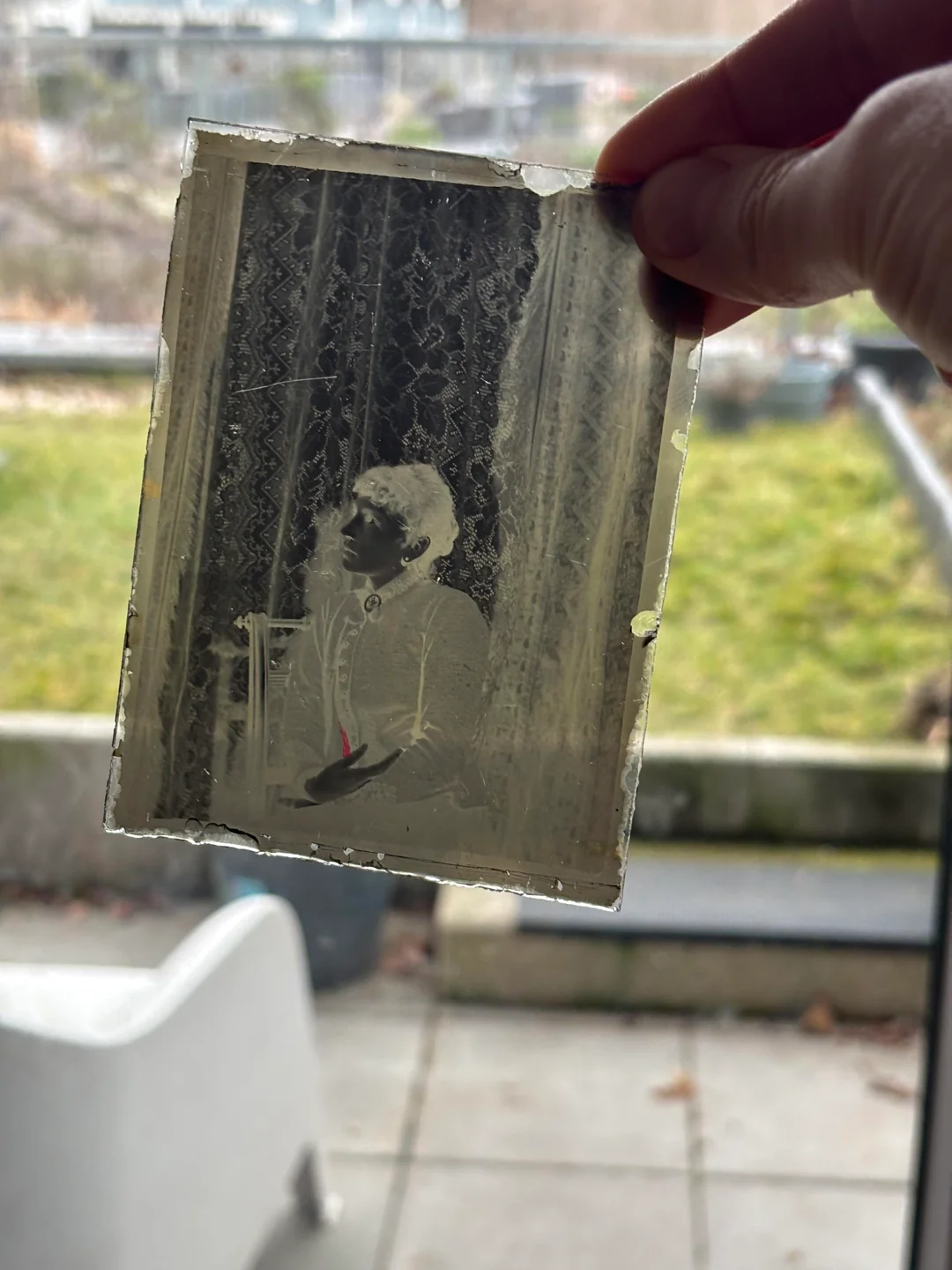
I've got a deal with one of the sellers at my local flea market — he sets aside negatives for me during the week. This Sunday there wasn't much. He knows I'm mostly after 35mm rolls, but he pulled out a glass plate and asked if I wanted it. I figured why not.
It's maybe 9x12cm, chipped edges, some surface scratches. But the emulsion is still intact — you can see the image clearly when you hold it up to light.
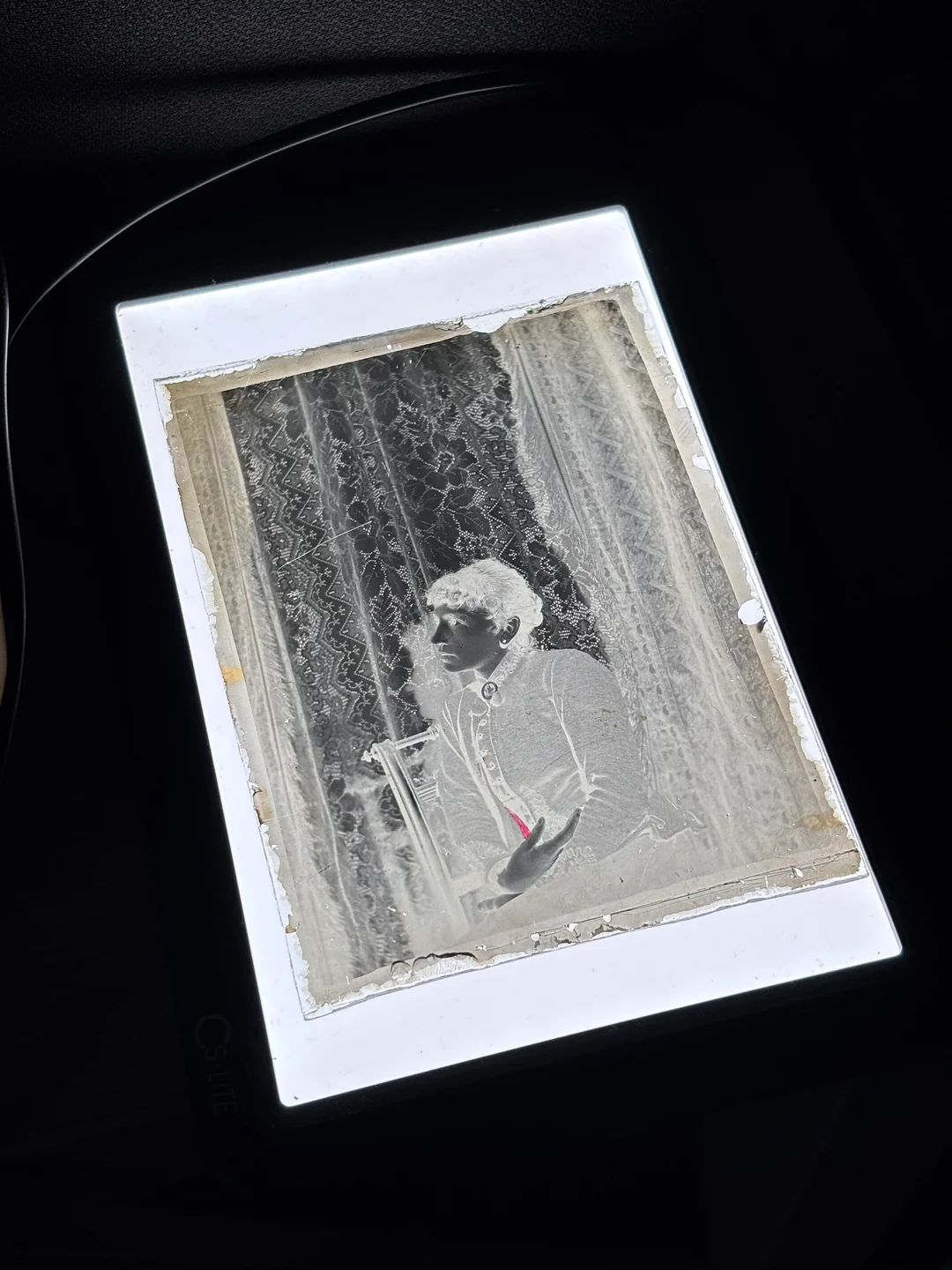
On a lightbox the detail really comes through. It's a woman, seated, photographed in profile. She's wearing a high-collared dark dress with a row of buttons down the front. There's a brooch at her neck. Behind her, a lace curtain with a floral pattern. She's sitting in a wooden chair, hands in her lap, looking away from the camera.
How old is it?
I had no idea when I bought it. Could've been 1870, could've been 1910. I posted it online and someone who knows Victorian fashion dated it to roughly 1881–1884 based on the costume and hairstyle. The tight curls pinned up, the high collar, the fitted bodice — apparently that's a pretty specific window.
Could be a couple years off in either direction, but somewhere in the early 1880s seems right.
The scan
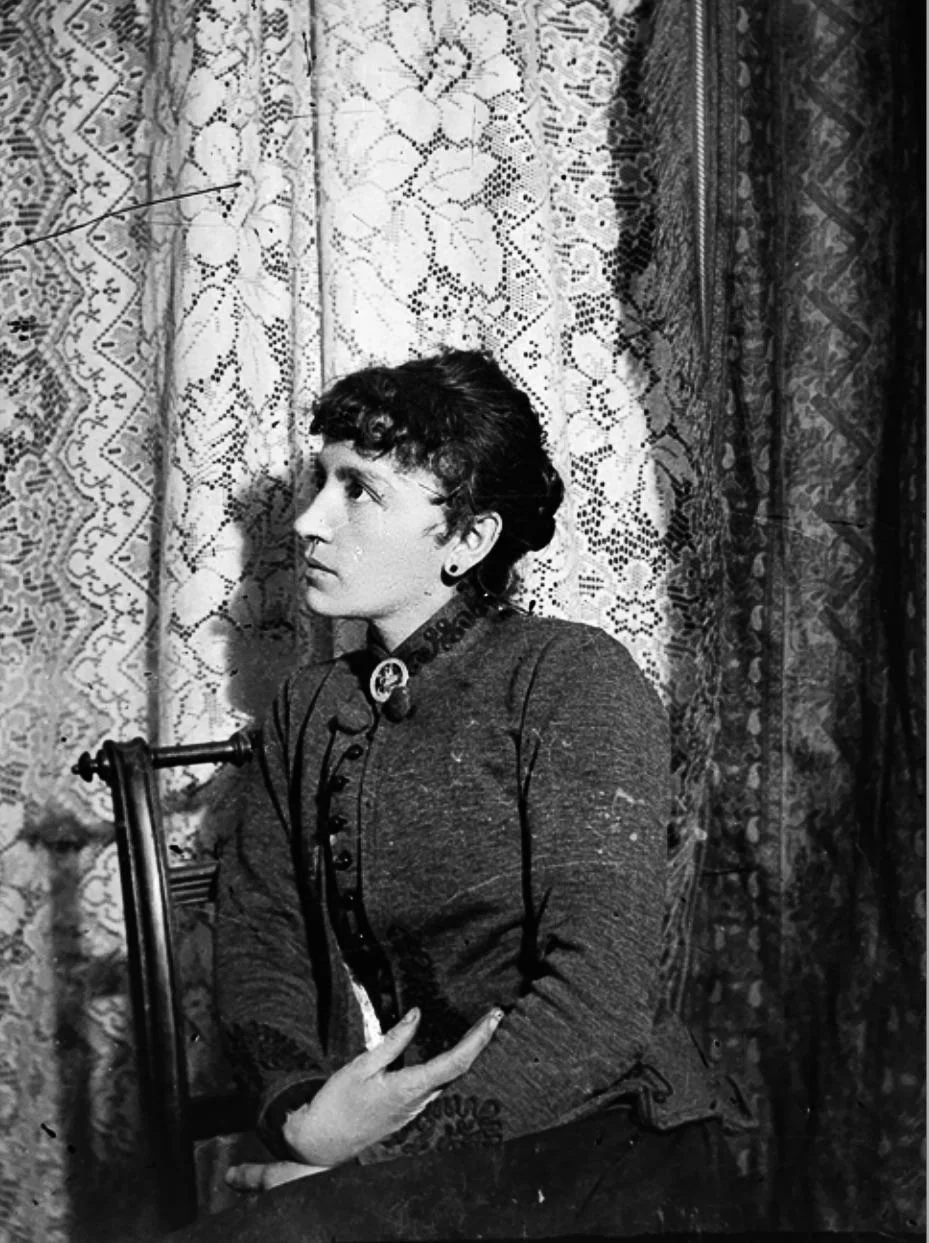
When you invert a glass negative you get a positive image, and this one turned out sharp. The lace curtain behind her is incredibly detailed — you can see individual patterns in the weave. Her expression is calm, maybe a little serious. That was normal for portraits back then — long exposure times meant you had to hold still.
What gets me is the hands. They're slightly blurred, which means she moved them during the exposure. Everything else is perfectly still. She held the pose, but her hands gave her away.
Glass negatives
Before film rolls there was glass. Photographers coated glass plates with a light-sensitive emulsion, exposed them in large-format cameras, and developed the plates by hand. Every single photograph was a glass plate. This process was standard from the 1850s through the early 1900s.
The fact that this one survived 140+ years in good enough condition to scan is kind of remarkable. Glass breaks. Emulsions flake off. Most of these ended up in the trash decades ago. This one made it to a flea market in 2025, which is more than you can say for most things from that era.
Who is she?
No idea. That's always the answer with these. She sat for a portrait sometime in the 1880s, probably in Europe. Someone kept the glass plate for over a century. Then it ended up in a box at a market, and I bought it for a few euros.
If you know anything about this type of portrait or recognize the style of the brooch — I'd love to hear it.