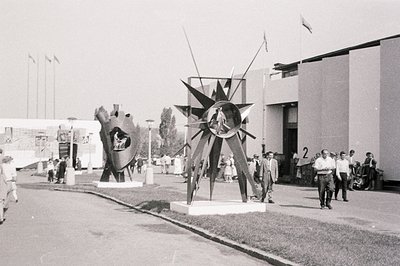
The thing that solved Case 32 wasn't the sculptures.
The sculptures got us the right country and the wrong city. What actually settled it was a wall — specifically, the vertical striped cladding on the building behind them, at one particular angle, in one particular photograph that someone was trying to sell on the internet.
What the frame gives you
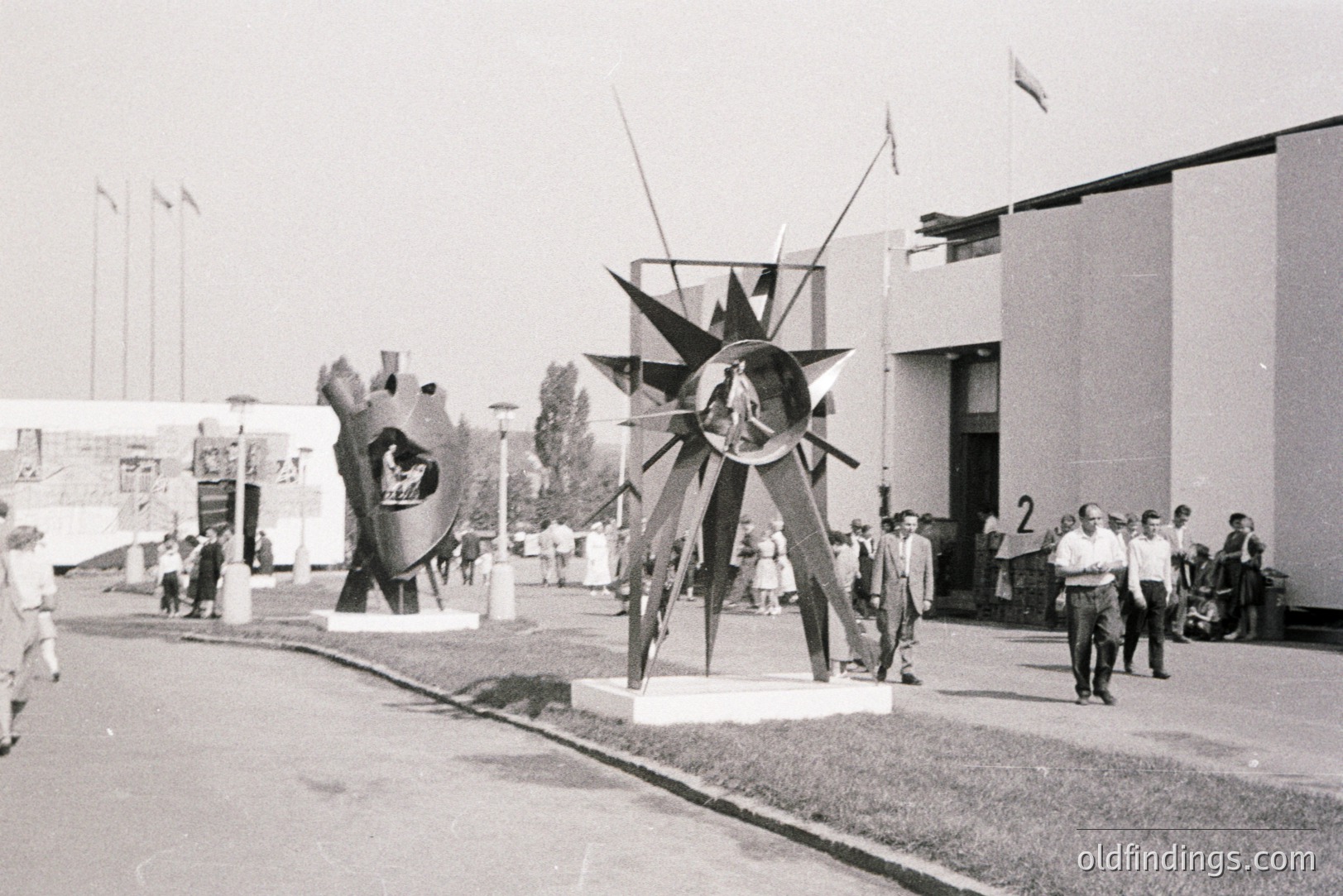
Not much. Two abstract figures on paving. A low modernist building behind, striped panels across its facade, flagpoles along the front. No shop signs, no vehicles, no legible text anywhere in the frame. Nothing that names a country.
It came off a roll bought at a Czech flea market, one frame in an unbroken run of about sixty across three scanned strips — one photographer, one outing, no annotations.
We filed it under a working title of "Soviet art?"
That was exactly backwards, and I'm leaving it in the record because the wrong first guess is usually load-bearing. It sends you to the wrong databases for the first hour.
Step one: the figures
@az started where anyone would start — with the only distinctive objects in the frame — and matched them to sculptures installed at the Czechoslovak pavilion at Expo 58 in Brussels.
Two things fall out of that immediately. The frame is 1958 or later. And it is Czechoslovak, not Soviet — the pavilion in Brussels was the thing that gave Czech design of the period its own name.
So: right country, no city, and a hard floor on the date. Good hour's work.
Step two: Prague, and why it doesn't hold
Here's where it goes wrong, and this is the part worth reading twice.
After the fair closed, the pavilion's restaurant was dismantled, shipped home and rebuilt in Letná park in Prague. If the restaurant travelled, the sculptures travelled with it. The photo is Letná. Case closed.
Except the surroundings don't match Letná, and the sculptures don't turn up in photographs of the Letná site.
The instinct at this point is to argue with the evidence — maybe the angle is unusual, maybe they were moved within the park, maybe the photos we're looking at are from the wrong decade. Don't. The useful move is to notice what the dead end actually taught you, which is narrower and more interesting than the hypothesis it killed:
The sculptures were exhibited in more than one place.
That's not a failure. That's a search term.
Step three: the next frame over
The break didn't come from this photograph at all. It came from frame 6-160, two positions later on the same roll — the same forecourt, wider.
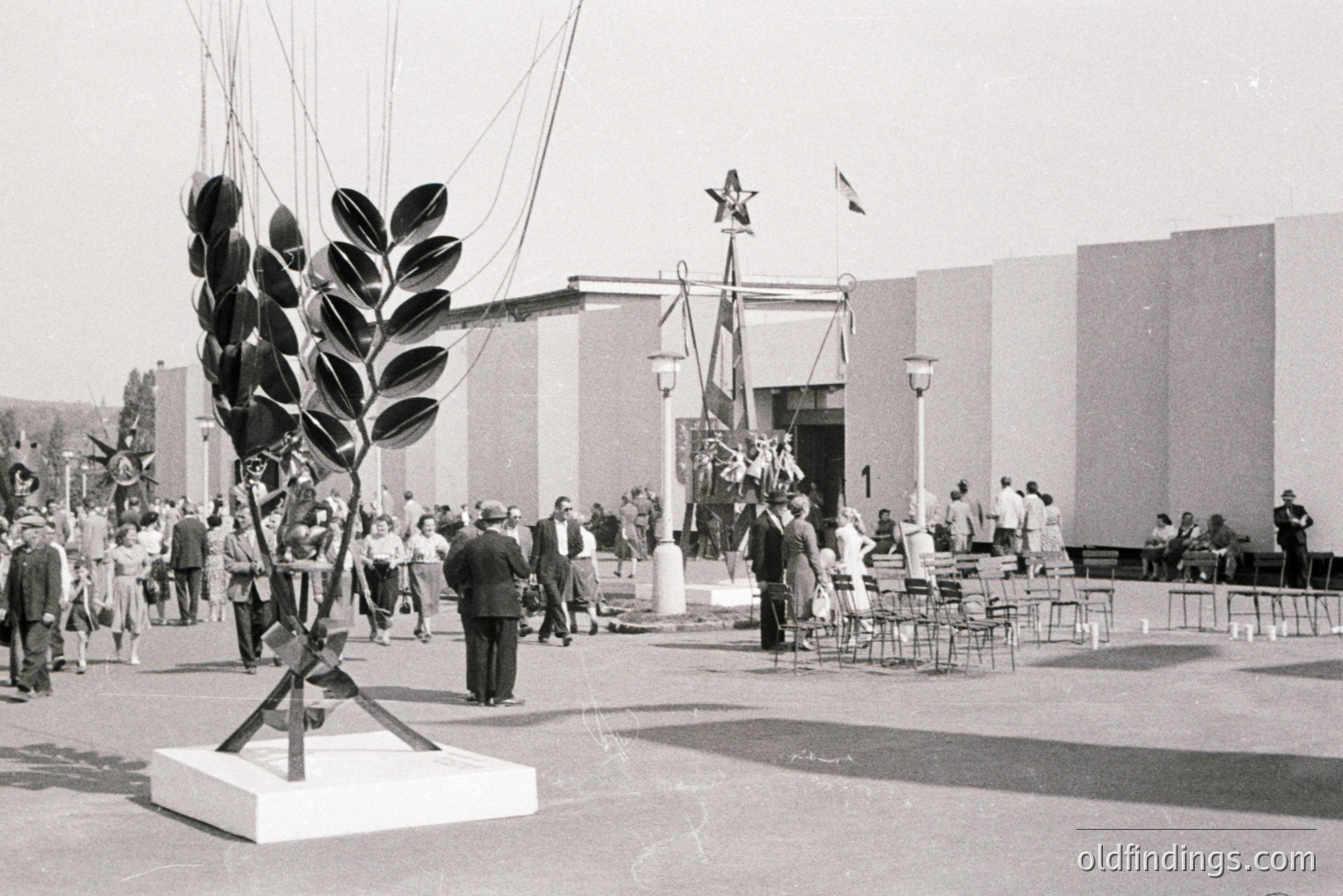
@az found an auction listing for a printed item from the Plzeň exhibition grounds — dated 8 September to 4 October 1959 — with photographs of the venue on its cover. One of those cover photos is the same angle and the same sculpture as frame 6-160, with the same striped panels on the building behind.
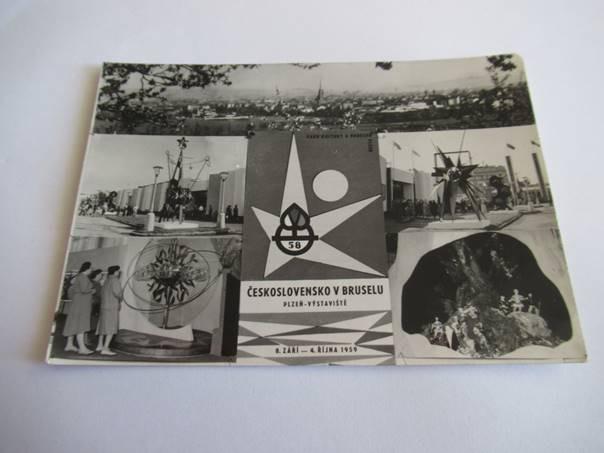
I want to be blunt about what that means for anyone reading this as a method post. The frame we had a case open on could not be solved from its own contents. The frame beside it could. If you scan rolls and publish single images, you are throwing away half your evidence.
Step four: standing where he stood
Once you have a venue name, the rest is map work.
The municipal exhibition grounds in Plzeň are documented at pam.plzne.cz, and PastVu holds period photographs of the site. Between them the layout resolves.
The flagpoles do the last bit of work. They run along the entrance side, which means the camera is standing inside the grounds looking back out. Not a visitor arriving. Someone already in, turning around.
49.7492733, 13.3700511, facing 211°. The entrance he's looking at is now the car park in front of a shopping centre.
Why the cladding beat the statues
The sculptures were the interesting object and they produced a wrong answer. The facade was the boring object and it produced the right one. That is not a coincidence, and it generalises:
A sculpture can be loaded onto a truck. A building's cladding, at a given angle, cannot.
When you're matching two photographs, rank your evidence by how hard it is to move. Statues, signage, vehicles, market stalls, people — all mobile, all capable of appearing in two cities a year apart. Rooflines, window rhythm, facade panels, the exact spacing of a row of flagpoles — those are fixed to a plot of land.
Mobile evidence tells you what. Fixed evidence tells you where. Confusing the two is how you spend a day in Letná park.
What we know now
| Place | Plzeň, městské výstaviště (municipal exhibition grounds), Czechoslovakia |
| Camera | 49.7492733, 13.3700511, facing 211° |
| Date | 8 September – 4 October 1959 |
| Confidence | Place: confirmed by photographic match. Date: high, but inferred from the exhibition run rather than from anything visible in the frame. |
The date deserves the asterisk. Nothing in the photograph is dated. What's dated is the exhibition the grounds are dressed for — the flags are up, the panels are in place. The frame sits inside that 27-day window on the strength of that dressing, not on the strength of a calendar.
Credits
Seven steps, all of them @az: the Expo 58 attribution, the Letná hypothesis and its elimination, the auction match, the standpoint.
The first nudge toward Plzeň came from a comment on the case on 21 April 2026, pointing at the city's public-art catalogue Křížky a vetřelci.
Still open
Fifty-nine frames of this roll are still unidentified. Same photographer, same outing, and now with a place and a fortnight to anchor them.
Two specific things, if you know Plzeň:
Where did the sculptures go after October 1959? They were in Brussels in 1958 and on this forecourt in 1959. After that, nothing we've found. If they still exist somewhere in the city — or if they were scrapped — someone reading this knows.
Was the striped building demolished with the grounds, or is part of it still standing behind the car park? A single present-day photograph would answer it.